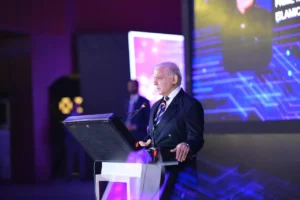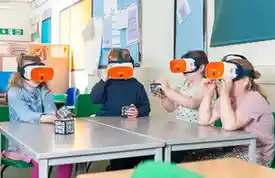
ISLAMABAD — A major revolution is underway in Pakistan’s education system! Meta (Facebook) has announced, in partnership with the Ministry of IT, the launch of “Metaverse Classrooms” across 50 public and private universities in Pakistan. Under this project, students will be able to attend live sessions with experts from around the world using VR (Virtual Reality) headsets. The initiative is specifically designed for Medical and Engineering students, allowing them to conduct experiments in a virtual environment.
Pakistan’s Universities Enter the Age of Immersive Learning
The announcement marks a significant turning point for higher education in Pakistan, a country where access to world-class laboratory equipment and international faculty has historically been limited to a handful of elite institutions. By bringing the metaverse into the classroom, this partnership aims to democratize high-quality education and give students in public universities the same experiential learning opportunities that were previously available only to those studying abroad.
Under the programme, participating universities will receive VR headsets and access to Meta’s immersive education platform, which allows students to enter fully rendered three-dimensional environments. A medical student in Lahore will be able to perform a virtual dissection guided by a specialist from London. An engineering student in Peshawar will be able to walk through a simulated power plant or construction site, interacting with its components in real time. These experiences go far beyond what a textbook diagram or a YouTube video can offer — they place the student inside the subject matter itself.
Why Medical and Engineering Students Benefit Most
The decision to initially focus the Metaverse Classrooms initiative on medical and engineering disciplines is a deliberate one. These are fields where hands-on practice is not just beneficial but essential, and where the gap between theoretical knowledge and practical application has long been a challenge in Pakistan’s university system.
Medical students currently face significant constraints in clinical exposure during their early years of study. Cadavers are expensive and limited, laboratory time is competitive, and access to rare procedures or conditions is largely a matter of chance. Virtual reality changes this equation entirely — students can repeatedly practice procedures, observe rare conditions, and build clinical confidence in a risk-free environment before ever entering a real hospital ward.
Engineering students face a parallel challenge. Complex systems — whether electrical grids, structural frameworks, or industrial machinery — are difficult to teach from diagrams alone. A virtual environment allows students to interact with these systems at scale, understand failure modes, and develop intuitive spatial reasoning that textbook learning simply cannot replicate.
The Broader Vision for Pakistan’s Digital Education Future
This collaboration between Meta and the Ministry of IT fits within a larger national strategy to position Pakistan as a digitally capable economy. With one of the youngest populations in the world and a rapidly expanding technology sector, Pakistan has both the demographic potential and the economic incentive to invest heavily in next-generation education infrastructure.
The metaverse classroom initiative is expected to expand beyond its initial 50 universities if early results demonstrate measurable improvements in student outcomes. Ministry officials have indicated that data on student engagement, examination performance, and practical skill acquisition will be monitored closely during the first phase of the rollout. A successful pilot could pave the way for integration into secondary schools and vocational training programmes as well.
For Pakistan’s students, the message is clear — the classroom of the future is not a room with four walls and a whiteboard. It is an infinite, immersive space where geography is no barrier, equipment is unlimited, and the best teachers in the world are always within reach.