
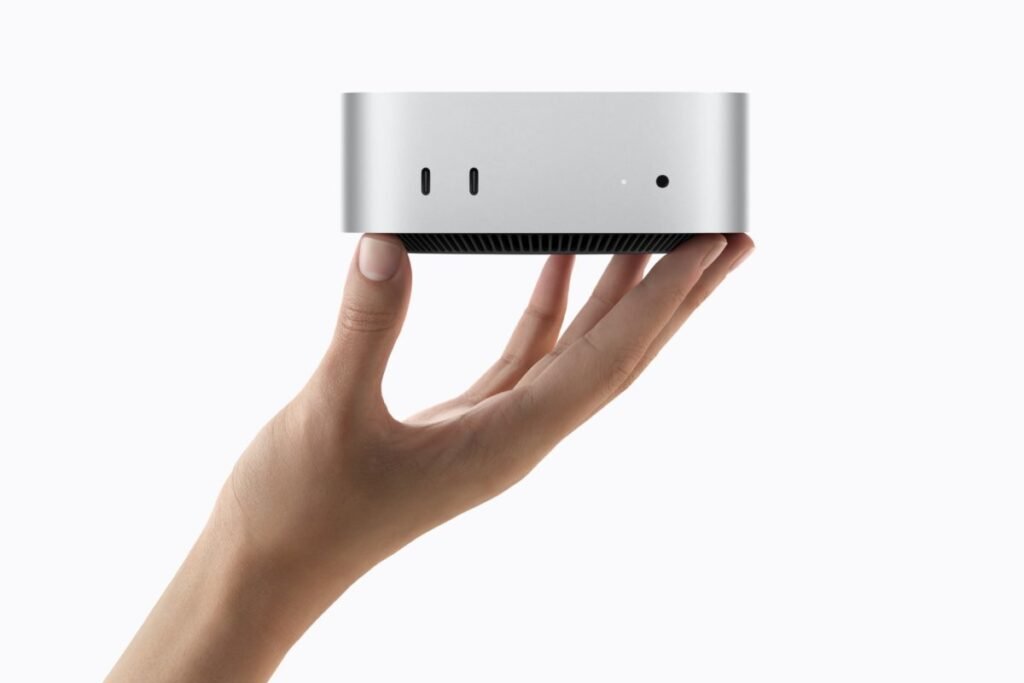
Apple has officially introduced its latest Mac Mini. It features the cutting-edge M6 silicon. This marks a significant step forward in the company’s desktop computing strategy. Starting at $899, the new base model comes equipped with 16GB of RAM and 256GB of storage, reflecting a shift in Apple’s entry-level pricing following the discontinuation of older, more affordable configurations. Pre-orders for the device opened immediately following the announcement, with shipping scheduled to commence after September 22. Beyond the standard M6, Apple also introduced a more robust Mac Mini variant powered by the M5 Pro chip, alongside a refreshed Mac Studio lineup featuring M5 Max and Ultra processors. These releases coincide with the rollout of macOS 27 and a more deeply integrated Siri AI. This positions the Mac Mini as a primary hub for local AI development. This hardware refresh aims to satisfy a growing segment of tech enthusiasts and developers who have increasingly turned to the Mac Mini for high-demand computational tasks and local AI agent hosting.
The shift to the M6 chip brings substantial performance improvements over the previous generation. Apple stated that the new Mac Mini offers AI performance that is four times faster than the M4 model. Furthermore, the internal storage and graphics processing capabilities have doubled in speed. The M6 processor itself features a 12-core CPU and a 12-core GPU, which is an increase from the 10-core CPU and 10-core GPU found in the M4 versions. This increased core count is a clear response to the evolving needs of the consumer tech market, where localized processing power is becoming a priority for users who prefer not to rely solely on cloud-based computing services.
For professional users who require even more power than the standard M6 can provide, Apple is offering a second Mac Mini variant featuring the M5 Pro chip. This more expensive version starts at $1,699 and includes 24GB of RAM and 512GB of base storage. The M5 Pro configuration is highly customizable; it ships with a 15-core CPU and a 16-core GPU by default, but users can choose to upgrade to a system with an 18-core CPU and a 20-core GPU. This flexibility makes the M5 Pro Mac Mini an attractive option for software developers, video editors, and engineers who need a compact workstation capable of handling sustained heavy workloads without the footprint of a full tower PC.
In addition to the Mac Mini updates, Apple also refreshed its high-end Mac Studio line. The new Mac Studio models are powered by the M5 Max and M5 Ultra chips, with prices starting at $2,499 and $5,499, respectively. The M5 Max base model provides users with 36GB of unified memory and 512GB of storage. Meanwhile, the M5 Ultra model is a true performance powerhouse, offering 96GB of unified memory and 1TB of storage in its base configuration. These machines continue to serve as the flagship desktop options for the most demanding creative and scientific applications, providing the massive unified memory bandwidth necessary for large-scale data sets and complex rendering tasks.
Connectivity is another area where the new models have seen a significant upgrade. Both the M6 and M5 Pro Mac Mini variants, as well as the Mac Studio machines, now support Wi-Fi 7 and Bluetooth 6. These standards offer lower latency and higher data transfer speeds, which are essential for the next generation of wireless peripherals and high-speed internet connections. On the wired networking side, the computers come standard with a 2.5Gb Ethernet port. However, acknowledging the needs of power users and small business server environments, Apple has made a 10Gb Ethernet port available as an optional upgrade across the lineup.
The timing of this release is particularly noteworthy given the recent market trends surrounding the Mac Mini. Over the past year, the device has become a favorite among tech enthusiasts for running local AI agents such as OpenClaw and Hermes. The ability to run these large language models and agents locally provides users with better privacy and faster response times compared to cloud-based alternatives. This trend reached such a peak earlier this year that Mac Minis were frequently found listed at marked-up prices on platforms like eBay, as buyers sought out the best hardware to host their personal AI environments.
Apple’s pricing strategy for this cycle also reflects the increasing cost of high-end silicon and memory. Earlier in the year, the company discontinued its previous entry-level Mac Mini model, which retailed for $599 and offered 256GB of storage. Until this current announcement, the base offering had been an M4 model with 512GB of storage priced at $799. By setting the new starting price at $899 for 256GB with the M6 chip, Apple is positioning the Mac Mini as a more premium product while ensuring that the base model has enough RAM (16GB) to effectively handle the demands of its upcoming macOS 27 and Siri AI features. The units are scheduled to begin reaching customers on September 22nd, ushering in a new era of desktop computing focused on localized artificial intelligence and high-speed connectivity.
Advancing Silicon Efficiency with the M6 Processor
Apple’s transition to the M6 chip in the latest Mac Mini provides a fourfold increase in artificial intelligence processing capabilities compared to its M4 predecessor. The M6 architecture features a 12-core CPU and a 12-core GPU, which represents a significant upgrade over the 10-core configurations found in previous generations. Beyond the raw core count, Apple has optimized the silicon to deliver storage and graphics performance that is twice as fast as the M4 model. These enhancements are specifically designed to support the demanding requirements of modern localized AI applications, ensuring that the Mac Mini remains a competitive option for developers and creative professionals who require high computational density in a compact form factor.
Diversified Hardware Configurations for Power Users
The introduction of an M5 Pro variant of the Mac Mini offers a high-performance alternative for users requiring more than the base M6 specifications. Starting at $1,699, the M5 Pro Mac Mini provides 24GB of RAM and 512GB of storage by default, catering to a mid-range professional market. The M5 Pro chip is equipped with a 15-core CPU and a 16-core GPU, though Apple offers higher-tier upgrades for users who need up to an 18-core CPU and a 20-core GPU. This tiered approach allows the company to capture demand from various user segments, ranging from casual consumers to enterprise-level developers who need significant memory and processing bandwidth for multi-threaded workflows.
Scaling Professional Desktop Power with Mac Studio
Apple has expanded its professional desktop ecosystem by launching new Mac Studio models powered by the M5 Max and M5 Ultra chips. The refreshed Mac Studio series addresses the highest end of the performance spectrum, with the M5 Max model starting at $2,499 and the M5 Ultra starting at $5,499. The M5 Max base configuration includes 36GB of unified memory and 512GB of storage, while the flagship M5 Ultra model boasts 96GB of unified memory and a 1TB SSD. These machines are engineered for heavy-duty tasks such as high-resolution video rendering and large-scale AI model training, reinforcing Apple’s commitment to the professional workstation market amidst a broader shift toward localized high-performance computing.
Modernizing Wireless and Network Standards
Both the new Mac Mini and Mac Studio models feature integrated Wi-Fi 7 and Bluetooth 6, ensuring compatibility with the latest high-speed connectivity protocols. Networking performance has been further bolstered by the inclusion of a 2.5Gb Ethernet port as a standard feature on both the M6 and M5 Pro Mac Mini variants. For users operating in environments with even more demanding data transfer needs, Apple offers an optional upgrade to a 10Gb Ethernet port. These connectivity upgrades, paired with the upcoming launch of macOS 27, ensure that the hardware can leverage the full bandwidth of modern network infrastructures, supporting seamless cloud integration and fast local data exchanges required for professional collaboration and AI agent orchestration.
Market Positioning and the AI Enthusiast Boom
The Mac Mini’s popularity has surged due to its utility in running local AI agents, leading to high demand and a subsequent increase in entry-level pricing. Tech enthusiasts have increasingly utilized the Mac Mini for running sophisticated local AI agents like OpenClaw and Hermes, which previously led to a vibrant secondary market where devices were sold at marked-up prices on platforms like eBay. Recognizing this shift, Apple has adjusted its product lineup by discontinuing the older $599 base model and establishing the $899 M6 version as the new entry point. While the price floor has risen, the inclusion of 16GB of RAM and enhanced AI throughput directly addresses the hardware requirements that have driven the recent surge in consumer interest.
