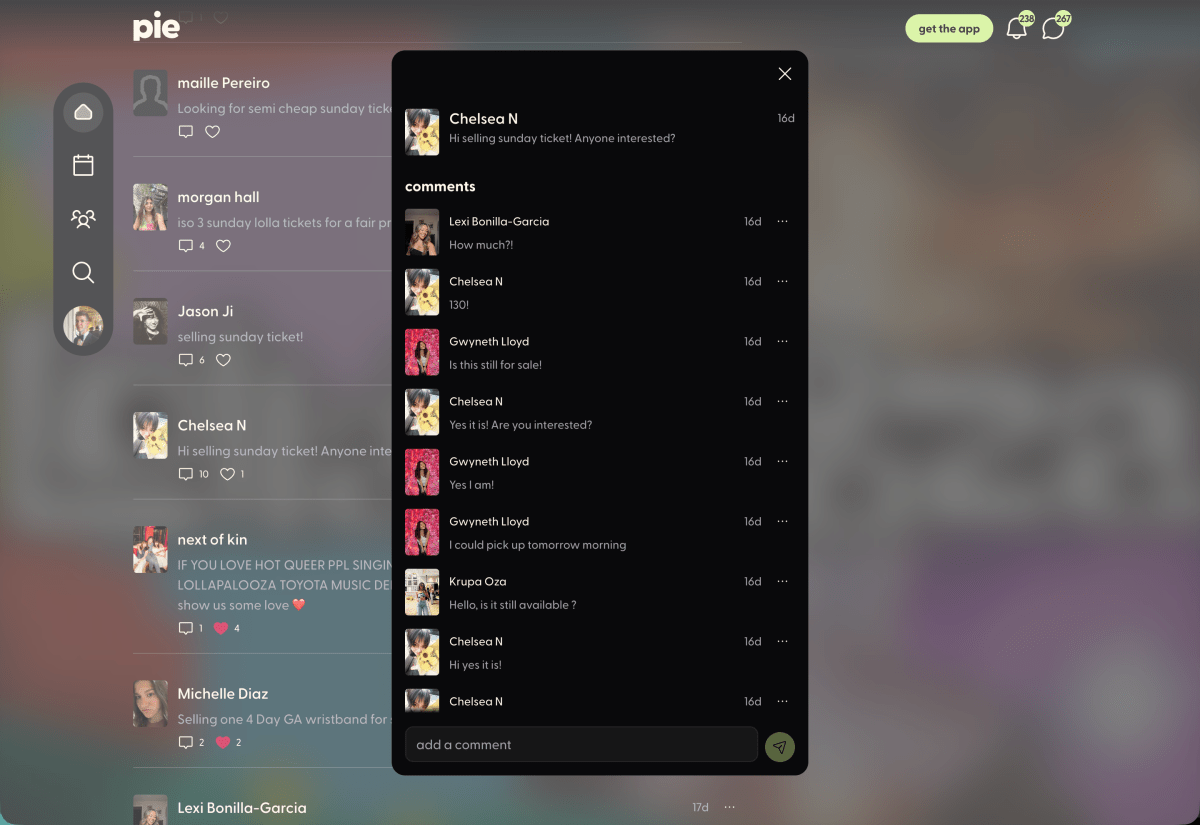
CHICAGO, ILLINOIS — Pie, the social application founded by Bonobos co-founder Andy Dunn, has officially launched a significant platform expansion designed to shift its identity from a transactional events tool to a comprehensive social networking environment. The startup recently debuted its Community Homes feature, which allows users to create dedicated digital spaces for recurring social groups, clubs, and organizations. Originally launched in Chicago to combat urban loneliness and social isolation, Pie has secured backing from prominent venture firms such as Forerunner, Lightspeed, and Accel, along with Twitter co-founder Ev Williams. With a growing user base of approximately 300,000 individuals, the app is capitalizing on a post-pandemic cultural shift where younger demographics are increasingly prioritizing real-world connections over purely digital interactions. By providing organizers with robust group management tools, member controls, and communal feeds, Pie aims to become the primary digital infrastructure for the burgeoning movement of social clubs, effectively positioning itself as a non-toxic, real-life alternative to legacy platforms.
Establishing Permanent Digital Hubs via Community Homes
The launch of Community Homes marks Pie’s transition into a more permanent social networking platform by providing groups with dedicated digital homepages. Rather than focusing on one-off events, these homes offer a central location for organizers and members to foster relationships over time. Each community hub includes a specialized feed and various administrative tools designed to facilitate group management:
* Admin and membership controls
* Shareable group homepages
* Event planning resources
Crucially, the platform allows any member to post events to the community feed, encouraging a decentralized and organic form of networking. This feature addresses the limitations of fragmented group texts and legacy social media groups, offering a streamlined resource for social clubs that require both digital coordination and physical presence to thrive.
Strategic Focus on Human-Centric Engagement Metrics
Strategic adjustments to Pie’s activity feed have significantly increased user engagement by prioritizing personal connections over simple event announcements. In late 2024, the development team modified the app’s feed to highlight which of a user’s acquaintances were attending specific gatherings, rather than simply listing what was happening. This change resulted in a dramatic rise in user retention, with average time spent on the application jumping from just two minutes to ten minutes. By showcasing the social context of an event, Pie transformed the user experience from a discovery search into a relational interaction. The startup continues to lean into this person-first philosophy through its favorites feature, allowing users to build public profiles based on their specific interests to foster more meaningful peer-to-peer discoveries.
Founder Vision and the Reddit for IRL Framework
Founder Andy Dunn envisioned Pie as a solution to the social isolation he personally experienced after relocating from New York to Chicago. Recognizing that digital-first socializing often fails to satisfy the need for genuine community, Dunn sought to build software that supports the Reddit for IRL concept. This philosophy treats the application as a bridge to physical interaction rather than a destination in itself. By providing the digital infrastructure for niche communities—such as run clubs, art markets, or watch parties—the app facilitates natural run-ins and deeper feelings of belonging. This mission aligns with a broader cultural trend among Gen Z and younger millennials who are moving away from traditional, often toxic online forums in favor of interest-based social clubs that prioritize physical presence.
Strategic Leadership and Community Growth Expertise
To bolster its community-building expertise, Pie has integrated Nadya Okamoto, founder of the popular Zoomies run club, as a co-founder and Chief Marketing Officer. Okamoto’s addition reflects the company’s commitment to understanding the mechanics of high-growth social movements. She characterizes the platform as a realization of the original, non-anonymous promise of Facebook and Reddit, where events are a natural byproduct of a healthy ecosystem rather than the sole draw. While the application is available for download globally, it currently maintains its strongest market presence in major metropolitan hubs including Chicago, New York, and Los Angeles. As the startup scales, the leadership team aims to bridge the gap between digital noise and intentional, real-life connectivity for its growing user base of approximately 300,000 individuals.
Securing Significant Venture Capital and Influential Angel Investment
Pie has successfully attracted a diverse group of investors, securing backing from top-tier venture capital firms and seasoned technology pioneers. The startup is currently supported by several prominent institutional and individual investors including:
* Forerunner
* Lightspeed
* Accel
* Ev Williams, Twitter co-founder
This robust financial support underscores investor confidence in the platform’s ability to capitalize on the emerging social club market. By providing a scalable software solution for real-world interactions, Pie is positioning itself to disrupt the traditional social media landscape. The infusion of capital is being used to refine the app’s infrastructure and expand its reach beyond its initial Chicago roots into competitive urban environments like San Francisco and New York.
Roadmap for Spontaneous and Casual Connectivity
The upcoming technical roadmap for Pie includes the introduction of group chats and casual bids for connection to enhance spontaneous networking. Pie plans to soon add integrated group chats to allow members to communicate directly within the app, further reducing the reliance on external messaging platforms. Additionally, a new feature will allow users to post casual bids for connection, such as asking if anyone wants to hang out and craft together or watch a television event without a formal plan. This shift aims to facilitate low-pressure social interactions that mimic the serendipity of real-life neighborhood dynamics. By enabling these informal requests, Pie is moving closer to its goal of creating a comprehensive ecosystem where people belong to communities and develop deep, lasting connections through both planned and unplanned activities.