
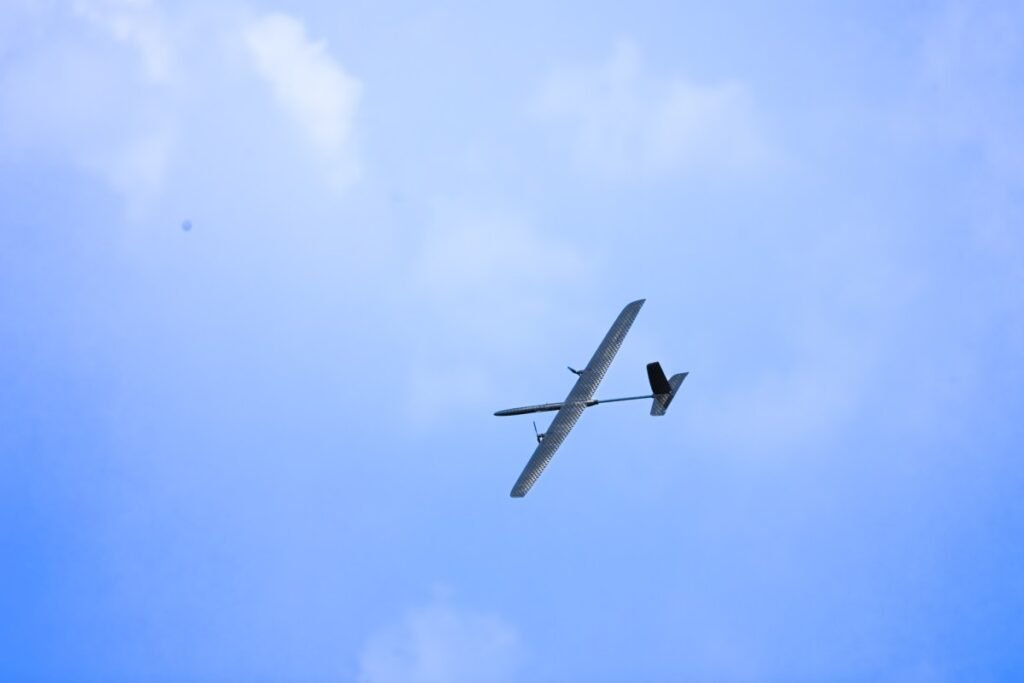
BENGALURU, INDIA — Alteon, a pioneering aerospace startup founded by 20-year-old Samay Sanghvi, has secured $2.5 million in pre-seed funding to pursue the ambitious goal of keeping autonomous aircraft airborne for more than a year. The investment round was led by prominent solo investor Lachy Groom, with participation from Together Fund, Emergent Ventures, and 1517. Based in Bengaluru, Alteon is developing small, fixed-wing aircraft designed to harvest energy from ocean wind shear through a technique known as dynamic soaring, similar to the flight patterns of an albatross. By extracting energy from layers of air traveling at different speeds, these aircraft could theoretically maintain flight indefinitely without traditional fuel or massive battery reserves. Initially focused on maritime surveillance, the technology offers governments a persistent and cost-effective method for monitoring territorial waters. Groom, who committed to the investment within 30 minutes of meeting Sanghvi, emphasized that while the technical hurdles are significant, the potential for persistent aerial platforms represents a transformative opportunity for the global transportation and surveillance sectors.
Harnessing Dynamic Soaring for Perpetual Flight
Alteon is engineering autonomous aircraft that utilize dynamic soaring to extract energy from the wind and remain aloft for several months or even a year. The technology is inspired by the flight of albatrosses, which maneuver between layers of air with varying speeds to gain momentum without flapping their wings. Alteon’s aircraft are designed to fly close to the ocean surface, climb into faster air, and descend again in a continuous cycle that harvests energy from wind shear. This method aims to overcome the traditional constraints of fuel capacity and battery life that limit the endurance of conventional drones. By maintaining a constant presence over the ocean, these platforms could revolutionize how maritime regions are monitored, providing a persistent eye in the sky that was previously impossible without expensive satellite constellations or high-endurance manned missions.
Securing Pre-Seed Capital and Institutional Backing
The startup recently raised $2.5 million in a pre-seed round led by solo investor Lachy Groom to accelerate the development of its autonomous flight systems. The funding round saw contributions from Together Fund, Emergent Ventures, and 1517, signaling strong venture interest in deep-tech aerospace solutions coming out of the Indian ecosystem. Founder Samay Sanghvi, who began developing early prototypes immediately after high school, initially taught himself aircraft design by building and testing numerous radio-controlled models. Groom’s decision to lead the round quickly underscores a high level of confidence in Sanghvi’s vision and the technical feasibility of the project. This capital injection is currently supporting a team of 20 specialists in Bengaluru and the operations of a 10,000-square-foot facility where the team produces up to five test aircraft per week to refine their aerodynamic models.
Proving Autonomous Control in Maritime Environments
Alteon has successfully completed autonomous flight tests over the Bay of Bengal, demonstrating the ability to maintain stable flight just one meter above the water. During these trials, the aircraft autonomously executed multiple O-shaped cycles at speeds exceeding 62 miles per hour. These tests were crucial for validating the startup’s flight control software, which must manage the complex task of flying extremely close to a moving and unpredictable ocean surface. While the company has not yet demonstrated full energy-neutral soaring, the ability to operate reliably at such low altitudes is a necessary precursor. The next major technical milestone for the company involves energy-neutral dynamic soaring, where the aircraft will attempt to stay airborne indefinitely with its primary propulsion systems switched off, relying entirely on the physical properties of the wind shear.
Addressing the Risks of Low-Altitude Oceanic Flight
Aerospace experts warn that the primary challenge for Alteon involves sensing and reacting to the volatile conditions of the ocean surface in real-time. While the physics of dynamic soaring is well-established, researchers from institutions like MIT and IIT Madras note that real-world deployment is complicated by turbulence, sea spray, rain, and fluctuating light conditions. An aircraft flying mere meters above the waves must continuously adjust for moving water and local wind variations that are far less predictable than large-scale weather patterns. To mitigate these risks, Alteon is focused on enhancing its sensor suites and autonomous reaction times. Managing these environmental factors is essential for the transition from controlled tests to long-term deployments where the aircraft must survive autonomous operations for months at a time without human intervention or maintenance.
Transforming Maritime Surveillance and Energy Harvesting
Initial use cases for Alteon’s technology are centered on maritime surveillance, providing governments with real-time visibility into activity within their territorial waters. Beyond monitoring, the startup has long-term plans to integrate advanced energy-harvesting systems that use propellers as turbines. In this configuration, once the aircraft gains sufficient altitude and speed through wind shear, it can use its motors to convert mechanical energy back into electricity to recharge onboard batteries. This dual-purpose design ensures that sensors and communications equipment remain powered even during periods of lower wind intensity. The ability to keep high-performance sensors in the air for over a year at a fraction of the cost of current satellite or naval alternatives represents a significant shift in the logistics of maritime security and global environmental monitoring.
The Evolution of a Self-Taught Aerospace Vision
Founder Samay Sanghvi began developing the core concepts for Alteon immediately after high school, refining his designs through iterative testing of physical models. The startup’s journey reflects a growing trend of young, self-taught entrepreneurs entering the deep-tech space by leveraging rapid prototyping and simulation tools. Sanghvi’s approach involved building and subsequently crashing early radio-controlled versions of his aircraft to understand the aerodynamic limits of dynamic soaring. This hands-on experience led to the formal founding of Alteon in 2025 and attracted early interest from specialized funds like Emergent Ventures and 1517. Today, the company operates a sophisticated research and development pipeline that allows for the construction and testing of multiple airframes every week, facilitating a fast-paced development cycle aimed at solving one of the most difficult endurance challenges in aviation history.
