
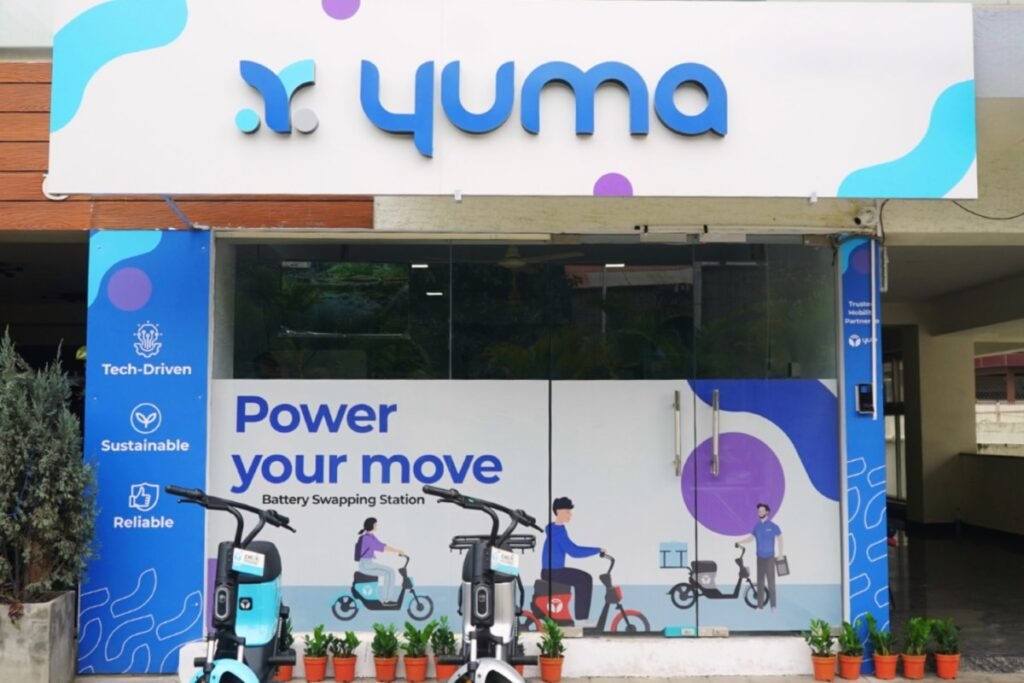
BENGALURU, INDIA — Magna International is intensifying its commitment to India's electric vehicle ecosystem through a $35 million follow-on investment in Yuma Energy. This fresh injection of capital raises the Canadian automotive supplier's total commitment to the Bengaluru-based battery-swapping firm to $87 million, solidifying its majority position in a venture originally launched as a joint effort with mobility startup Yulu. Operating a network designed for high-utilization two- and three-wheelers, Yuma has already facilitated over 60 million battery swaps across its infrastructure of 400 stations. The investment underscores a strategic belief that battery-swapping economics, while challenging in many global markets, are uniquely viable within India's massive delivery and gig economy. By targeting the high-uptime requirements of commercial riders, Yuma aims to reach EBITDA profitability within the next two quarters. The company plans to use the new funds to double its battery fleet and expand into major industrial hubs like Chennai and Pune, while continuing its transition toward supporting a broader range of electric vehicle manufacturers and fleet operators.
Consolidating Majority Control through Follow-on Funding
Magna International has increased its majority stake in Yuma Energy with a $35 million investment, bringing its total capital commitment to the entity to $87 million. This latest funding round dilutes the 49 percent stake previously held by the Indian mobility pioneer Yulu, although specific new ownership percentages remain undisclosed. Since the joint venture’s formation in early 2023, Magna has viewed the Indian market as a primary theater for its micromobility and energy-as-a-service ambitions. The auto parts giant originally committed $77 million to the Indian sector in 2022, with a significant portion directed toward establishing the battery-swapping infrastructure. By increasing its financial exposure now, Magna is signaling a long-term belief in the scalability of the swapping model, particularly as the Indian delivery sector shifts away from internal combustion engines toward more cost-effective electric alternatives.
Scaling Infrastructure to Meet Rising Delivery Demand
Yuma Energy currently operates more than 400 swapping stations and 2,500 charging units, with plans to double its current fleet of 100,000 batteries over the next 18 months. The firm has achieved significant operational milestones, surpassing 60 million lifetime swaps since its inception. The newly acquired capital will specifically facilitate geographical expansion into Chennai and Pune, while densifying existing networks in cities like Mumbai, Bengaluru, and the Delhi region. Management emphasizes that the capital-intensive nature of the business requires building capacity ahead of demand to ensure rider convenience. With about 10 to 15 percent of India’s gig workers currently using electric vehicles, Yuma sees a massive opportunity to capture the remaining market share by providing a reliable, fast-swapping solution that minimizes downtime for professional riders compared to traditional plug-in charging methods.
Targeting Financial Sustainability through Aggressive Growth
Yuma Energy reported approximately ₹1 billion in revenue for the financial year ending March 2026 and expects to reach EBITDA break-even within the next two quarters. While the company as a whole is not yet profitable, managing director Muthu Subramanian confirmed that several older swapping stations have already achieved positive EBITDA status. This performance suggests that the unit economics of battery swapping are improving as station utilization increases across urban hubs. The firm’s strategy involves maintaining tight control over its supply chain by designing and manufacturing its own battery packs in Chennai and charging units in Bengaluru. This vertically integrated approach allows Yuma to manage hardware costs and optimize network performance, which is critical for a business that must balance high upfront capital expenditures against the steady, recurring revenue generated from battery exchange subscriptions.
Diversifying the Customer Ecosystem Across Vehicle Platforms
Swaps from non-Yulu customers now account for up to 20 percent of Yuma’s quarterly volume, reflecting a strategic shift toward becoming a universal energy provider. Although Yulu remains the primary driver of network activity, Yuma has integrated its battery technology with more than 10 different vehicle platforms, including models from Kinetic Green, BGauss, and Quantum Energy. The company anticipates that third-party fleets and individual commercial riders will comprise at least 25 percent of its customer base within the next two years. This diversification is essential for mitigating the risks associated with single-customer dependency and for demonstrating the broad utility of Yuma’s swapping standards across the Indian micromobility landscape. As other manufacturers adopt Yuma-compatible designs, the network's value increases, creating a competitive moat against rival energy providers in the region.
Leveraging Vertical Integration for a Global Roadmap
Yuma Energy maintains total control over its technology stack by manufacturing its own proprietary battery packs and charging stations within specialized Indian facilities. The company produces its battery hardware at a dedicated facility in Chennai and handles charging unit production in Bengaluru, ensuring that all components are optimized for the unique climate and usage patterns of the region. This technical autonomy is a cornerstone of the firm’s longer-term strategy to expand beyond the subcontinent. While the immediate focus for the next 18 months remains on the Indian market, management is eyeing international expansion into Southeast Asian nations such as Vietnam and Thailand, as well as emerging markets in Africa. These regions share similar characteristics with India, including high two-wheeler density and a growing reliance on gig workers, making Yuma’s model a potentially viable export.
