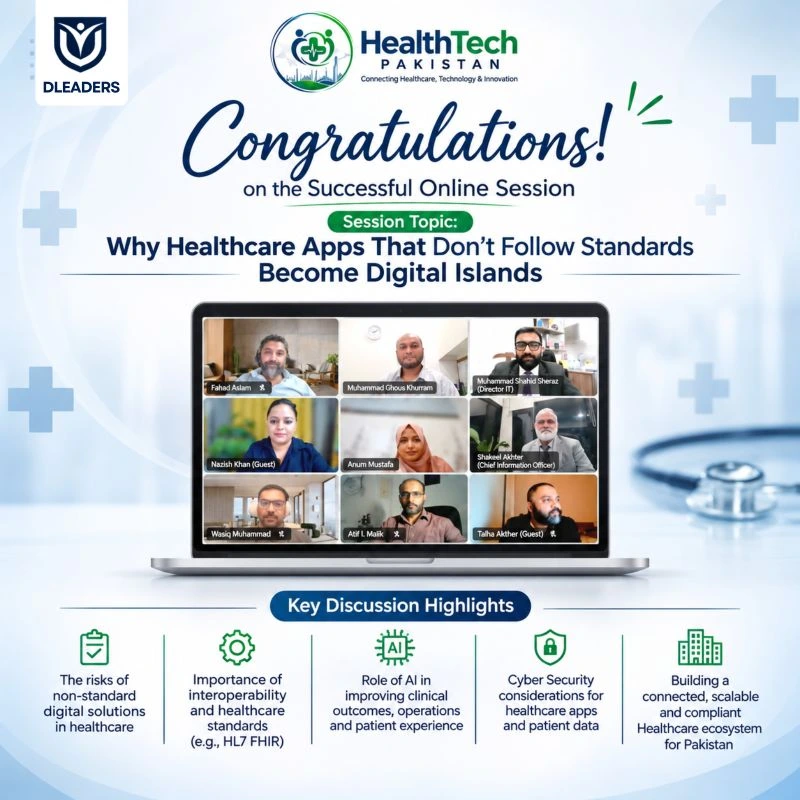
HealthTech Pakistan, in collaboration with Digital Pakistan Innovators, successfully held an online session titled “Why Healthcare Apps That Don’t Follow Standards Become Digital Islands.” The discussion brought together healthcare professionals, IT leaders, and digital health innovators to examine a growing problem in Pakistan’s healthcare technology space, systems that fail to communicate with each other.
What the HealthTech Pakistan Session Covered
The session featured a strong lineup of speakers and panelists, including Fahad Aslam, Muhammad Ghous Khurram, Muhammad Shahid Sheraz (Director IT), Nazish Khan, Anum Mustafa, Shakeel Akhter (Chief Information Officer), Syed Wasiq Muhammad, Atif I. Malik, and Talha Akhter. Together, they unpacked five key themes shaping Pakistan’s healthcare technology ecosystem.
1. Interoperability and Healthcare Standards
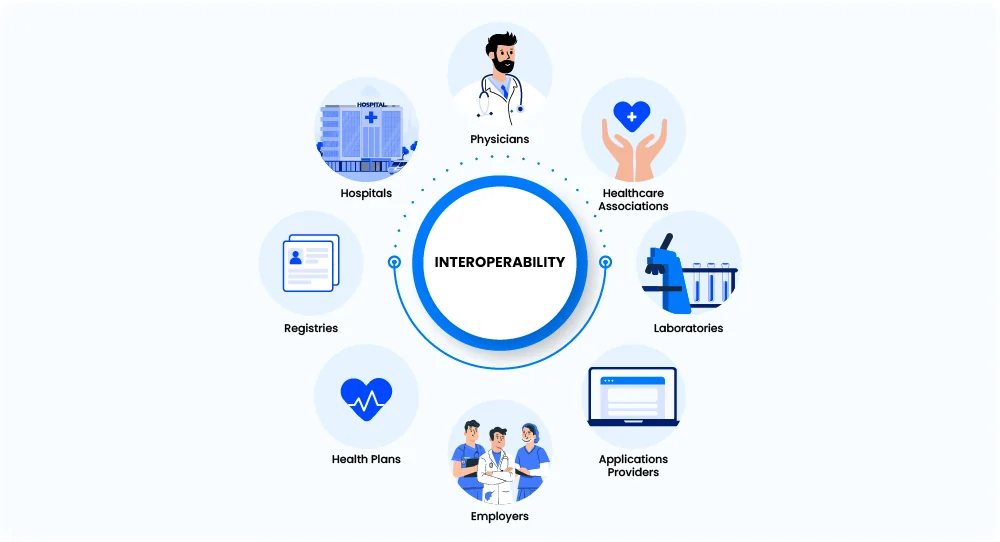
A central theme of the healthcare technology discussion was interoperability. Apps that skip recognized frameworks like HL7 and FHIR end up functioning as isolated digital islands, unable to exchange data with hospitals, labs, or other healthcare systems. Without these standards, even well-built applications struggle to deliver real value across a connected care network.
2. The Role of AI in Healthcare
Artificial intelligence was highlighted as a growing force in Pakistan’s digital health landscape. From clinical decision-making to patient care, operational efficiency, and predictive health insights, AI is already reshaping how healthcare services are delivered. Panelists shared practical examples of where AI-driven tools are making the most measurable impact.
3. Cybersecurity in Healthcare Apps
Patient data protection emerged as a non-negotiable priority. Speakers emphasized that healthcare apps remain secure only when backed by strong cybersecurity frameworks, including access controls, encryption, and compliance measures that are actually enforced, not just documented on paper.

4. Digital Transformation in Healthcare
The session framed digital transformation around four core principles: connected, scalable, secure, and interoperable healthcare solutions. As panelists noted, these principles are easy to state but far harder to implement, making them a long-term priority rather than a quick fix for Pakistan’s healthcare apps.
5. The Road Ahead for Healthcare Technology
Looking forward, the discussion stressed that healthcare professionals, IT leaders, innovators, startups, and policymakers all need a seat at the table. Building a truly connected healthcare ecosystem requires collaboration across these groups, not isolated efforts from any single stakeholder.
HealthTech Pakistan’s Vision for a Connected Ecosystem
HealthTech Pakistan’s long-term vision remains focused on building a connected, intelligent, interoperable, and cyber-secure healthcare ecosystem for the country. This session, organized with Digital Pakistan Innovators, is being seen as a meaningful step toward that goal, bringing key voices in Pakistan’s health IT and digital health space onto a single platform.
Key Discussion Highlights
- The risks of non-standard digital solutions in healthcare
- Importance of interoperability and healthcare standards (HL7, FHIR)
- Role of AI in improving clinical outcomes, operations, and patient experience
- Cybersecurity considerations for healthcare apps and patient data
- Building a connected, scalable, and compliant healthcare ecosystem for Pakistan
Conclusion
As Pakistan’s healthcare sector continues its shift toward digital-first solutions, sessions like this one organized by HealthTech Pakistan highlight a critical truth: technology alone isn’t enough. Without interoperability, security, and cross-sector collaboration, healthcare apps risk becoming disconnected tools rather than part of a functioning digital health ecosystem. The conversation signals growing momentum, but as panelists noted, the real work lies ahead.