
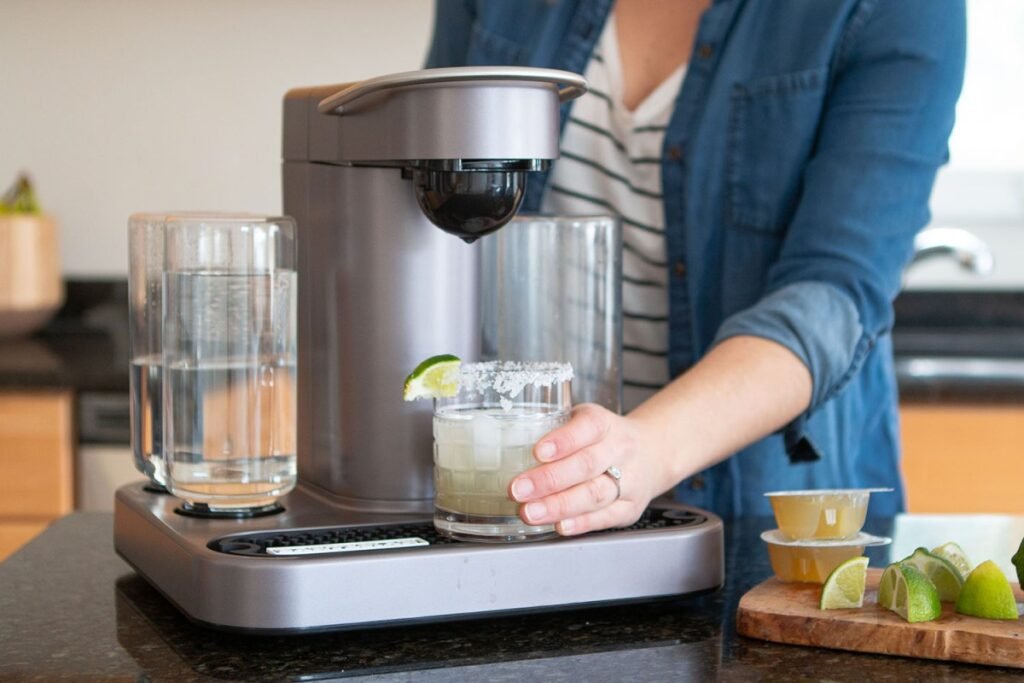
As the “Keurig for cocktails” trend matures, the Bartesian Duet has emerged as a prominent contender in the automated home bar market, offering professional-grade convenience at a $300 price point. Tested by TechCrunch, the device simplifies mixology by utilizing concentrated capsules and a barcode-scanning system to dispense precise measurements of user-provided spirits. While the machine successfully automates the creation of diverse drinks like espresso martinis and margaritas, it raises significant questions regarding its necessity and target demographic. The system requires an initial investment in hardware followed by recurring costs for capsules, which retail for approximately $2.50 each. Despite its sleek design and the novelty of its “cocktail robot” status, the Bartesian faces scrutiny over the artificial taste of certain concentrates and the substantial counter space required for its operation. Ultimately, while the technology functions as promised, its value proposition depends heavily on a user’s willingness to sacrifice ingredient authenticity for the push-button ease of a digital bartender.
Streamlining the Home Bar Experience
The Bartesian Duet automates the mixology process through a sophisticated barcode-scanning interface that modulates water dilution based on preferred drink strength. To operate the machine, users fill designated reservoirs with one to four types of liquor and insert a hyper-concentrated flavor capsule. The device identifies the specific cocktail—such as a mai tai or cosmopolitan—via a barcode on the lid and prompts the user to select their desired alcohol potency. This setting controls the volume of water the machine dispenses to mix with the concentrate. Once dispensed, the mixture is combined with ice in a provided high-quality shaker, ensuring the final beverage is chilled before serving. This automated workflow eliminates the need for measuring jiggers or complex recipe knowledge, making it accessible to amateur hosts.
Challenges in Flavor Authenticity and Ingredient Complexity
The reliance on non-alcoholic capsules means the machine must use flavor approximations for complex liqueurs like crème de violette, occasionally resulting in an artificial taste. A primary critique of the Bartesian system is that capsules do not contain actual alcohol; they provide the mixers to which the user’s own spirits are added. For simple drinks like a lemon drop, where the primary alcoholic component is vodka provided by the user, the results are generally favorable. However, for more intricate cocktails like the aviation, the machine must rely on synthetic substitutes for specialty liqueurs. This can lead to a flavor profile that tastes artificial to experienced cocktail enthusiasts. Some users find it necessary to supplement the robot’s output with fresh citrus or seltzer to achieve a more natural palate, though this undermines the core goal of total automation.
Evaluating the Hardware Footprint and Long-Term Costs
Prospective buyers must weigh the $300 retail price and the significant kitchen counter space required against the device’s utility as an occasional-use gadget. The Bartesian Duet is a substantial piece of hardware, designed for kitchens with ample surface area. Its size and price suggest it is intended as a luxury centerpiece rather than a daily-use appliance. Beyond the initial $300 cost for the machine, users must factor in the price of proprietary capsules, which average $2.50 per drink, in addition to the cost of the premium spirits they must provide themselves. For those with limited space, justifying such a bulky investment can be difficult, particularly since frequent use might be required to validate the expense. Furthermore, affluent consumers who possess the necessary counter space often already own a fully stocked bar, creating a unique market paradox for the manufacturer.
Identifying Niche Applications and Demographic Appeal
Industry observers suggest the Bartesian may find its most successful applications in high-volume environments like co-working spaces, retirement homes, or vacation properties. While individual cocktail aficionados may be skeptical, the machine offers significant benefits for hosts who wish to provide a full cocktail menu without the logistical burden of hiring a professional bartender. The ease of use makes it a viable option for happy hour events at office spaces, where the speed of service and variety are prioritized over artisanal quality. Additionally, it has been noted as a potential status symbol for retirement communities or secondary beach residences where social gatherings are frequent. The ability to produce multiple drink types—from watermelon margaritas to ginger gimlets—with zero prep work provides a level of hospitality that is difficult to replicate manually at scale.
Sleek Industrial Design and Premium Accessories
The Bartesian Duet features a modern aesthetic and includes high-end accessories like a durable cocktail shaker to enhance the perceived value of the automated system. Despite criticisms regarding taste, the physical build of the Bartesian Duet is highly regarded. The machine is designed with a sleek profile that aligns with modern smart-home aesthetics, and the inclusion of a high-quality, professional-grade shaker is a notable highlight. This secondary step of shaking the drink with ice is essential for cooling the concentrate, as the machine itself does not refrigerate the spirits or water. This tactile element keeps the user involved in the process while the technology handles the precision of the pour. The combination of digital scanning and traditional shaking attempts to bridge the gap between futuristic automation and the classic cocktail-making experience.
Divergent Consumer Sentiment on Mixed Drink Automation
Reviewer feedback remains polarized, with some praising the machine for its convenience while others remain unconvinced by its role in a sophisticated home bar. Customer reception of the Bartesian ecosystem varies based on individual priorities and taste preferences. Long-term testing by tech journalists has produced conflicting results; some users have lauded the system for elevating their home bars with high-quality margaritas. Conversely, others find the maintenance of a specialized capsule-based system to be an unnecessary complication compared to traditional mixing. This divide highlights the ongoing tension in the kitchen-tech sector: the trade-off between the art of manual preparation and the efficiency of robotic assistance. As the brand continues to expand its library of capsule recipes, it must strive to narrow this gap by improving the natural quality of its flavor concentrates.
