
Introduction
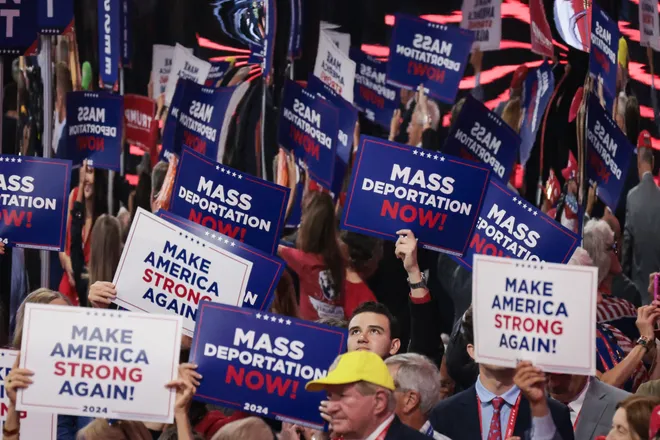
In a bold and controversial declaration, former President Donald Trump has announced that, if re-elected, he will declare a national emergency and deploy the U.S. military to carry out mass deportations. The statement has ignited fierce debate, underscoring the sharp divisions in American politics. From legal complexities to humanitarian concerns, the proposal raises urgent questions about the future direction of U.S. immigration policy.
What Does Declaring a National Emergency Mean?
Legal Framework
Declaring a national emergency expands presidential powers, allowing the Commander-in-Chief to reallocate resources, bypass certain legislative procedures, and take swift, often drastic, actions in the name of national interest.
Historical Precedents
While national emergencies have been declared for events such as natural disasters and security threats, using this tool to enforce mass deportations would mark a historic and controversial departure from precedent—raising significant legal and ethical concerns.
The Plan for Mass Deportations
Trump’s Vision and Strategy
Trump frames illegal immigration as a national security threat, proposing swift removals that bypass traditional legal processes. His plan emphasizes expedited deportations and aims to remove millions of undocumented immigrants.
Military Involvement
Traditionally focused on defending against external threats, the U.S. military’s potential role in immigration enforcement would represent a major shift, raising alarms about the militarization of domestic policy and the erosion of civil liberties.
Implications of Mass Deportations
Economic Impact
Removing millions of undocumented workers could disrupt key industries—such as agriculture, construction, and hospitality—leading to labor shortages, higher consumer prices, and economic instability.
Effects on Immigrant Communities
Families could be torn apart. Children, including U.S. citizens, may be separated from their parents, leading to psychological trauma and long-term community damage.
Broader Social and Cultural Consequences
Large-scale deportations could deepen social divisions and impact the nation’s identity as a country shaped by immigrants, potentially inflaming xenophobia and mistrust.
Legal and Ethical Concerns
Constitutional Challenges
Critics argue the plan could violate constitutional protections—including due process and equal protection under the law—if individuals are denied proper legal procedures.
Humanitarian Backlash
Mass deportations risk ignoring basic human rights, and are likely to face strong public opposition, protests, and legal resistance from civil rights organizations and advocacy groups.
Comparison with Trump’s Previous Immigration Policies
Policies from 2016–2020
Trump’s first term saw a range of strict immigration measures, including:
- The travel ban targeting several Muslim-majority countries
- The family separation policy at the southern border
- Efforts to end DACA and restrict asylum
These set the foundation for the current proposal.
A Continuation of Hardline Stances
The new plan reflects a continuation—and intensification—of Trump’s hardline immigration agenda, aligning closely with the political priorities of his base.
Political and Global Reactions
Supporters’ Perspective
Supporters argue that the plan is a necessary step to restore law and order, deter illegal immigration, and prioritize American citizens in economic and social programs.
Critics’ Viewpoint
Opponents view it as populist theater, designed to galvanize Trump’s base rather than address the root causes of immigration. They warn it could undermine democratic norms and human rights obligations.
International Response
- Mexico and other Latin American countries have expressed concern about the humanitarian impact and diplomatic consequences.
- The plan may strain international relations, especially with allies who view mass deportations as contrary to international human rights law.
The Political Landscape Ahead
Impact on the 2024 Presidential Election
Immigration is now poised to be a central issue in the election, potentially swaying undecided voters and energizing both Republican and Democratic bases.
Widening Political Polarization
This announcement reflects the deepening divide in American politics, with immigration policy emerging as a defining battleground in the broader culture war.
Conclusion
Trump’s promise to declare a national emergency and use the military for mass deportations represents a pivotal moment in U.S. political discourse. While supporters see it as a bold move to secure the border and uphold national sovereignty, critics warn of constitutional violations, economic harm, and irreparable social damage.
As the nation inches closer to a high-stakes election, the fate of this proposal—and the broader future of American immigration policy—hangs in the balance.
Stay Informed
Keep up with the latest developments in U.S. politics and global affairs by visiting our News Section. Explore in-depth analysis, expert commentary, and real-time updates.
FAQs
Q: What is the legal definition of a national emergency in the U.S.?
A: It allows the President to access special powers to respond to a crisis beyond standard legislative processes.
Q: Can the U.S. military enforce immigration laws?
A: Normally, no. Immigration enforcement is handled by civilian agencies like ICE and CBP, with Posse Comitatus laws limiting military involvement in domestic law enforcement.
Q: What are the economic consequences of mass deportations?
A: Past deportations have led to labor shortages, particularly in agriculture and construction, impacting supply chains and economic growth.
Q: Is this plan legal under international law?
A: Mass deportations may violate international human rights agreements that prohibit arbitrary removal and emphasize due process.
Q: Can Trump realistically implement this plan if re-elected?
A: Implementation would face legal challenges, opposition from Congress, logistical hurdles, and potential resistance from state and local governments.
